
AI search engines like ChatGPT and Copilot have their own crawl budgets that determine which of your pages they can access and cite. To maximize visibility, audit your robots.txt to explicitly allow AI bots, remove duplicate and broken URLs that waste crawl capacity, and keep your sitemaps current with accurate dates. These straightforward technical fixes ensure your best content gets discovered by AI systems instead of being buried under low-value pages.
Developers: 6 Fixes to Free Up Crawl Budget for AI
Crawl budget for AI-driven search engines is the set of pages those engines can and want to crawl to use as citations. The priority action is immediate: make sure AI bots can reach your highest-value pages, and strip out the thin, duplicate or broken URLs that waste the crawl allowance you already have. The checklist and verification steps below show exactly where to start.
***
TL;DR: >- Ensuring your highest-value pages are accessible to AI crawlers is crucial, so audit robots.txt and remove or block thin, duplicate, or broken URLs.- Use explicit allow rules for AI user agents like OAI-SearchBot and GPTBot, and prefer noindex tags rather than disallow directives to control page visibility.- Regularly update sitemaps with accurate lastmod dates and submit via IndexNow to enable faster content discovery and freshness signals for AI grounding.- Fix server errors, support 304 responses, and avoid reliance on client-side rendering to improve crawl efficiency and content visibility for AI systems.- Monitor crawler activity by reviewing server logs for user agents and response codes, keeping in mind that OpenAI robots respect robots.txt changes within about 24 hours.
***
Table of Contents
- What controls how much AI crawlers will crawl from your site
- Practical technical checklist to improve AI crawl efficiency
- How to verify access and measure the effect on AI citation eligibility
- Developer checklist: robots.txt rules and firewall checks for AI bots
- Common mistakes that waste crawl budget and how to fix them quickly
- Tom Heaton's perspective on audits and quick wins
- Get your free AI visibility audit
- FAQ
- Sources
What controls how much AI crawlers will crawl from your site
Google defines crawl budget as the combination of two forces: the crawl capacity limit, which is how much your server can handle without degrading, and crawl demand, which is how much Google (and by extension, AI crawlers using similar logic) actually wants to fetch based on a URL's perceived value and freshness. Google treats each hostname as its own crawling entity, so subdomains and separate properties are budgeted independently.
AI crawlers add a second layer of complexity because they are not one bot with one purpose. OpenAI documents that OAI-SearchBot powers ChatGPT's search answers, while GPTBot is used for model training. A site can allow one and block the other in robots.txt, depending on whether it wants inclusion in live search results, training data contribution, or both. Bing's crawlers feed Copilot grounding in a similar way, and IndexNow gives sites a direct channel to flag new or changed URLs rather than waiting to be rediscovered.
The practical implication is straightforward:
- Crawl capacity and crawl demand still govern AI crawl access, just as they do for traditional search.
- Bot-specific robots.txt rules now decide which AI surface sees your content, not just whether Google indexes it.
- Discovery signals such as sitemaps and IndexNow matter more for AI grounding, where freshness often outweighs raw authority.
Standard technical SEO still forms the foundation. What changes is the number of distinct crawlers you now need to account for.
Practical technical checklist to improve AI crawl efficiency
Fixing crawl efficiency for AI bots is mostly a matter of applying existing technical SEO discipline with a few bot-specific adjustments layered on top.
- Audit robots.txt for AI user agents. Allow OAI-SearchBot and GPTBot explicitly if you want ChatGPT visibility or are comfortable with training inclusion; use noindex meta tags, not robots.txt, when you want a page crawled but excluded from results.
- Keep sitemaps current. Include accurate lastmod dates and submit changes through IndexNow so Bing-compatible engines, including Copilot, pick up updates faster than a crawl cycle alone would allow.
- Consolidate duplicate URLs. Use rel=canonical, consistent internal linking and sensible parameter handling so crawlers are not repeatedly fetching near-identical pages.
- Fix server-side friction. Resolve 5xx errors, support 304 Not Modified responses where content hasn't changed, and cut time-to-first-byte to protect your crawl capacity limit.
- Remove thin and soft-404 pages. Pages that return a 200 status but carry no real content, waste crawl allocation that could go to pages worth citing.
- Avoid relying solely on client-side rendering for core content. Server-side rendering or pre-rendering ensures crawlers see the same content a person would, rather than an empty shell waiting on JavaScript.
Pro Tip: Run your highest-priority pages through a simple fetch-as-bot test before and after changes, rather than waiting for a full re-crawl to confirm robots.txt edits have taken effect.
Bing's webmaster guidance is explicit that crawl capacity is allocated according to site health, efficiency and crawl value, and recommends eliminating duplicate or low-value URLs as the most reliable way to free up crawl resources for pages that matter. For teams working through this in sequence, our developers' checklist for OpenAI bot access walks through the robots.txt and IP verification steps in more detail.
How to verify access and measure the effect on AI citation eligibility
Confirming that AI crawlers actually reach your priority pages takes a few concrete checks rather than guesswork.
- Pull server logs and filter for OAI-SearchBot and GPTBot user agent strings to see which URLs they're fetching and how often.
- Review HTTP response codes across those log entries: a run of 403 or 429 responses usually points to a firewall or CDN rule blocking the crawler rather than a robots.txt issue.
- Watch for referral traffic carrying utm_source=chatgpt.com, which OpenAI confirms it appends automatically to links shared in ChatGPT, giving you a direct signal that a page was surfaced and clicked.
- Cross-check indexing and crawl frequency in Google Search Console and Bing Webmaster Tools, alongside IndexNow submission history, rather than relying on any single dashboard.
OpenAI's own guidance states that robots.txt changes take roughly 24 hours to be respected by its crawling systems, which matters when you're testing a fix and expecting an immediate result. Judge success by impressions, indexing status and crawl frequency first. Clicks alone won't tell you whether a page was even eligible to be seen, and our guide to verifying AI crawler user agents covers the full list of official strings to match against your logs.
Developer checklist: robots.txt rules and firewall checks for AI bots
A working robots.txt file for AI visibility needs explicit allow rules for the crawlers you want, not just an absence of blocks.
Crawler | Purpose | Typical directive |
|---|---|---|
OAI-SearchBot | Powers ChatGPT search answers | Allow: / |
GPTBot | Used for OpenAI model training | Allow or Disallow depending on training preference |
Googlebot | Standard Google indexing and AI features | Allow: / |
Bingbot | Indexing feeding Copilot grounding | Allow: / |
Use noindex meta tags, not robots.txt disallows, when you want a page crawled and understood but kept out of citations entirely. A robots.txt block prevents the crawler from reading the page at all, so it can never assess whether the content deserves to be cited.
IP-based allowlists are fragile because crawler IP ranges change without notice. OpenAI's advertiser guidance warns that WAF, CDN and bot-mitigation tools frequently block its crawlers by accident, and recommends checking configuration against the published user-agent strings rather than maintaining a static IP list. User-agent and behaviour-based rules hold up far better over time than short-lived IP ranges.
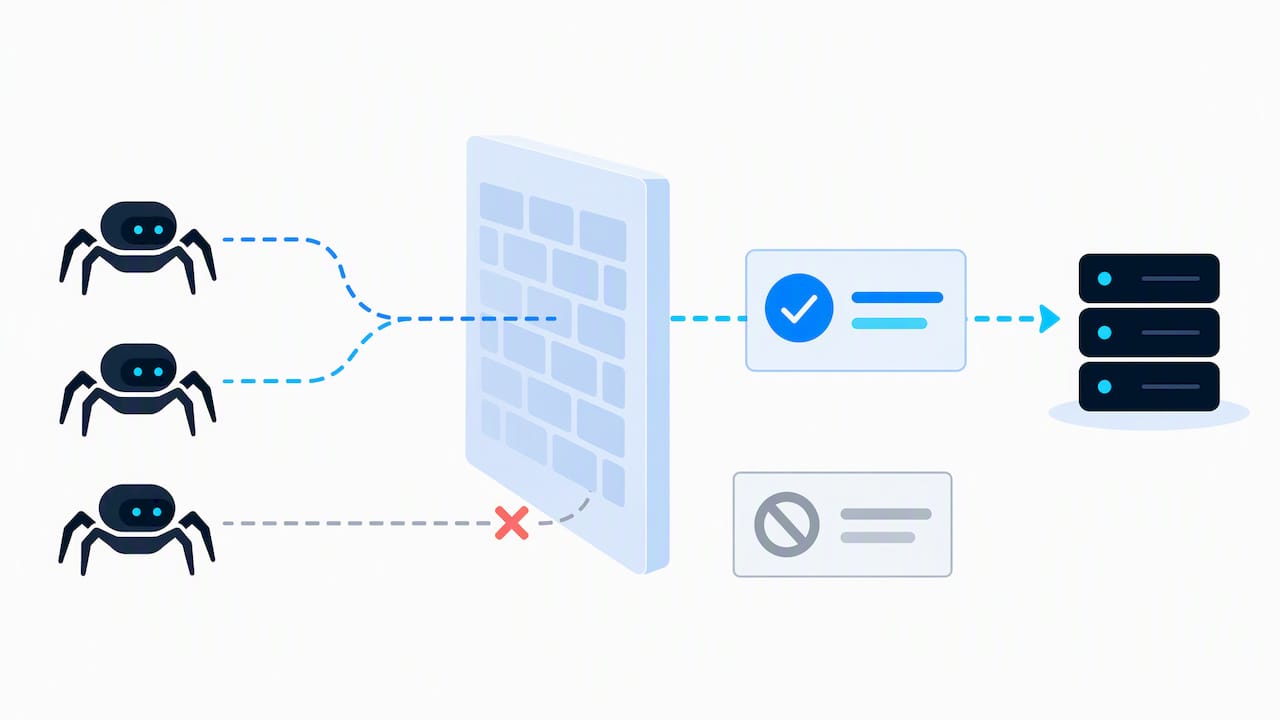
Pro Tip: Check your CDN's bot-mitigation logs weekly during the first month after any robots.txt change. A silent 403 against GPTBot or OAI-SearchBot can undo the fix you just made.
Some publishers are also experimenting with llms.txt as a supplementary signal, though it carries no official standing with the crawlers covered above. Our technical SEO for AI guide covers how these signals sit alongside robots.txt in a broader visibility strategy.
Common mistakes that waste crawl budget and how to fix them quickly
Most wasted crawl allocation comes from a short list of repeat offenders, and each has a fast fix.
- Soft 404s and thin pages: return a proper 410 status for permanently removed content, or expand thin pages until they carry genuine value.
- Parameterised URLs and faceted navigation: canonicalise variants back to one clean URL, or disallow the combinations that add no unique content.
- Overblocked robots.txt rules: a blanket disallow keeps URLs queued indefinitely; switch to noindex when the goal is hiding content, not refusing the crawl entirely.
- Short-term IP allowlists: these break the moment a crawler's IP range shifts, so lean on user-agent checks and behaviour-based rules instead.
Our guide on SEO-friendly internal linking covers the canonicalisation side of this in more depth, particularly for sites with large faceted catalogues.
Tom Heaton's perspective on audits and quick wins
Across the audits we run, the pattern repeats: sites lose crawl capacity to problems that are small individually but compound badly together. A blocked user agent here, a thin tag page there, a sitemap that hasn't been touched in months. Our free audit scores sites across six dimensions of AI citability, and the quickest wins are almost always robots.txt corrections, sitemap cleanup and canonical fixes rather than anything structural. Start with the free audit at cited.best/audit and the priority list usually writes itself.
— Tom Heaton
Get your free AI visibility audit
We offer an AI audit that scores your site across multiple dimensions of AI citability and provides a prioritised list of fixes, each with its likely impact on crawl efficiency and citation eligibility.
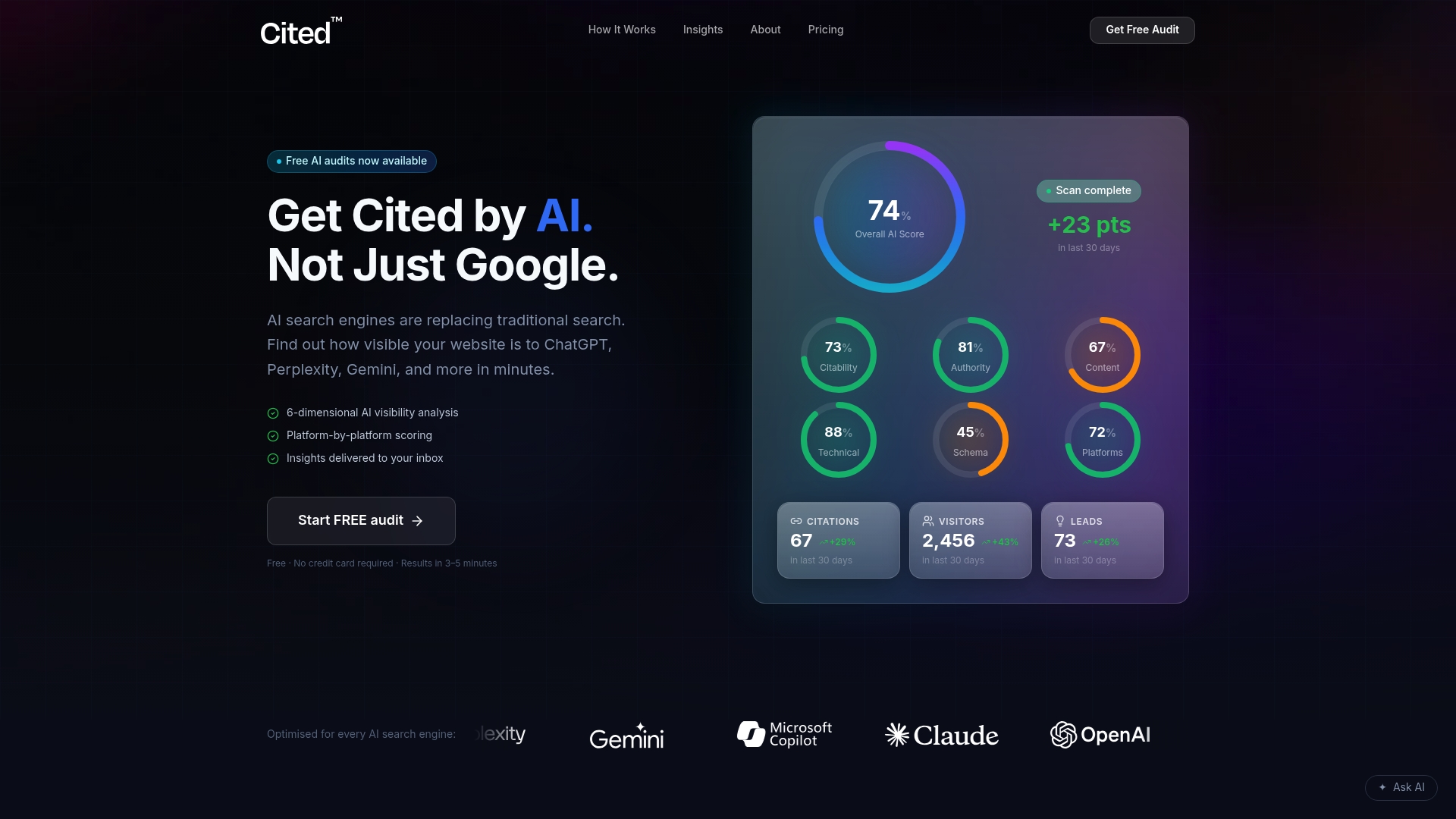
Run through the audit yourself, or ask us to handle implementation directly. We provide technical fixes as a one-off service and ongoing managed service plans for sites that need monitoring and adjustment as crawler behaviour shifts; current prices are available on our pricing page. Enterprise sites with more complex platforms can arrange a call to discuss custom pricing. Start with the Cited and see where your crawl budget is actually going.
FAQ
What is crawl budget for AI search engines?
Crawl budget for AI search engines is the set of pages a crawler like OAI-SearchBot or GPTBot can and wants to fetch, shaped by your server's capacity and the perceived value of your content, closely mirroring Google's own crawl budget definition for traditional search.
How long does a robots.txt change take to apply to ChatGPT?
OpenAI's developer documentation states that robots.txt updates typically take around 24 hours to be respected by its crawling systems, so test fixes a day later rather than immediately.
Does IndexNow guarantee faster indexing by AI search tools?
No. IndexNow notifies participating engines about new or updated content and helps speed up discovery, but it does not guarantee immediate crawling or indexing, so accurate sitemaps still matter alongside it.
What is the difference between GPTBot and OAI-SearchBot?
OpenAI distinguishes the two by purpose: GPTBot gathers content for model training, while OAI-SearchBot powers live ChatGPT search answers, and a site can allow one while blocking the other in robots.txt.
How do I check if AI crawlers can actually reach my site?
Review server logs for OAI-SearchBot and GPTBot user agent hits and check the HTTP status codes returned. Repeated 403 or 429 responses usually indicate a firewall or CDN block rather than a robots.txt restriction, and our free audit at cited.best/audit flags this automatically.
Sources
- Crawl budget, Google Developers
- Overview of OpenAI crawlers, OpenAI
- Webmaster guidelines, Bing
- IndexNow documentation, Bing
- Publishers and developers FAQ, OpenAI Help Centre
Recommended
Ready for your AI score?
See how visible your site is to ChatGPT, Perplexity & Gemini.
Start FREE auditResults in minutes · 100% free