
An editorial policy page must clearly state your peer review model, name who makes editorial decisions, and explain how to file complaints—all visible on the page itself rather than buried in linked documents. AI systems and readers alike use this information to assess whether your publication operates fairly and transparently. Detailed procedures can live in downloadable guides, but the three core elements need to be immediately accessible.
3 Essentials to Make an Editorial Policy Page AI Citable
An editorial policy page states how a journal reviews, decides on and corrects content, and it must cover three essentials immediately: the peer review model used, who owns editorial decisions and how to contact them, and the route for complaints or appeals. Readers, authors and reviewers all rely on this page to judge whether a publication operates fairly. Detailed codes, reviewer guidance and contact details belong in downloadable documents linked from the page itself.
***
TL;DR: >- Clarify whether the peer review is single-anonymised, double-anonymised, open, or editor-mediated, and state the initial screening process for scope and originality.- Clearly name the editorial decision makers, such as the editor-in-chief, and explain how delegation to guest or handling editors works and is recorded.- Disclose conflict-of-interest procedures for authors, reviewers, and editors, especially for editor-authored submissions, including a transparent flowchart for handling these cases.- Specify authorship criteria, duplication rules, and the process for changing authors after submission, as well as screening for prior publication overlap.- Detail escalation routes for misconduct allegations, the authority to issue corrections or retractions, and repository deposit rules, including embargo periods and licensing terms.
***
Table of Contents
- How does peer review and editorial screening actually work?
- Who decides, and how is editorial independence protected?
- How should conflicts of interest and editor-authored submissions be handled?
- What should authorship and plagiarism screening rules say?
- How are misconduct allegations, corrections and retractions handled?
- What rules apply to data, copyright and repository deposits?
- Which external standards and maintenance details should the page name?
- What should the page link to make it operational?
- Why does a clear editorial policy page matter for discoverability?
- How can we help you prepare a policy page AI systems will cite?
- Publisher perspective: policies written for lawyers don't get cited
- FAQ
- Sources
How does peer review and editorial screening actually work?
An editorial policy page needs to name the exact peer review model in use: single-anonymised, double-anonymised, open or editor-mediated. Readers and prospective authors cannot judge fairness without knowing who sees whose identity during review.
Screening before peer review matters just as much as the review itself. Warwick's Exchanges policy describes an initial check for scope and originality that can stop a manuscript before it ever reaches a reviewer, a step authors often confuse with full peer review. Naming this distinction on the policy page avoids that confusion and sets realistic expectations about timing.
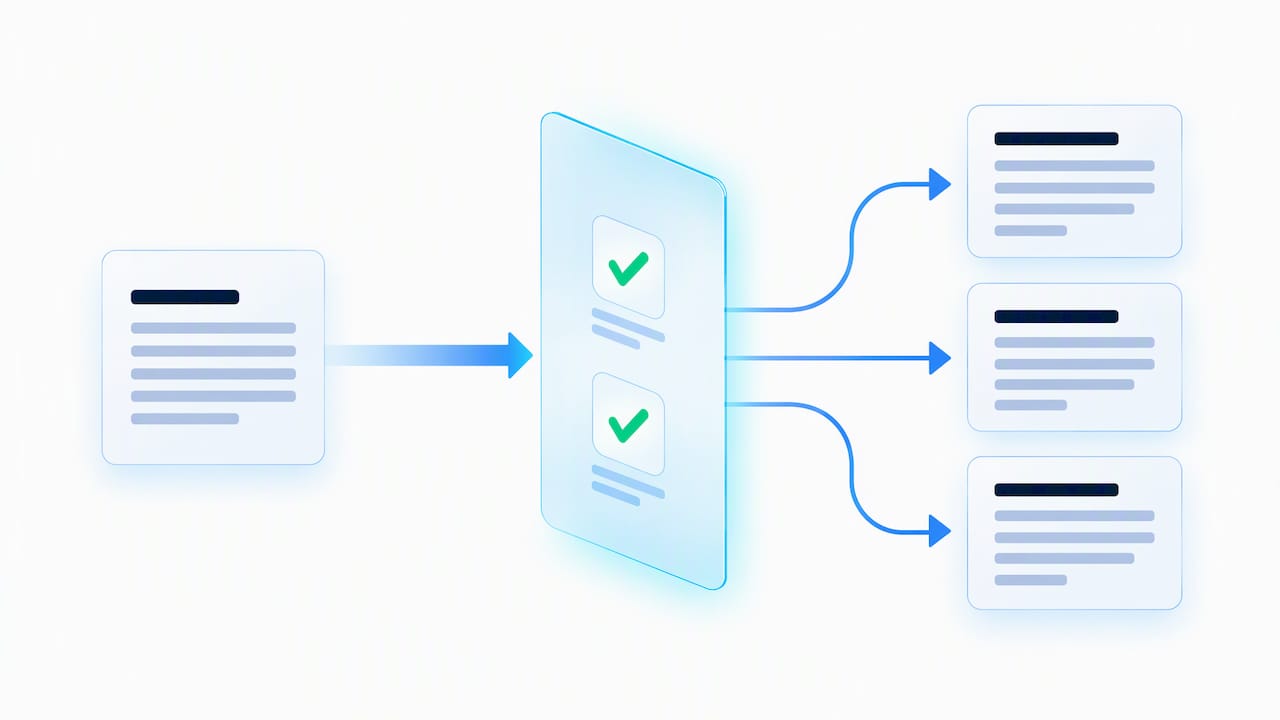
Reviewer reports raise a related ownership question. The same Warwick policy states that reviewer reports remain the reviewer's intellectual property, which affects whether those reports can be published alongside a decision or shared outside the editorial team. A policy page should state this plainly rather than leave it implied.
An operational editorial policy page on this topic typically covers:
- The peer review model used, named explicitly rather than implied.
- Whether screening for scope and originality happens before full peer review.
- Who owns reviewer reports and whether they are ever published.
- An approximate timeline from submission to first decision.
Authors searching for an editorial policy page often want an estimated timeline more than anything else, since submission windows and funding deadlines depend on it.
Who decides, and how is editorial independence protected?
Editorial independence depends on separating the people who make acceptance decisions from any commercial or institutional pressure to publish. A policy page should name the roles responsible for that decision, typically an editor-in-chief or a handling editor, and state clearly that publishers do not override editorial judgement.
Delegation needs the same clarity. Guest editors and handling editors often manage special issues or specific submissions, and the policy page should explain how that delegation works and how decisions get recorded so there is a trail if a decision is later questioned.
Governance details belong on the same page or one click away:
- The decision-making roles, named by title rather than left generic.
- How guest or handling editor delegation is assigned and recorded.
- Where editorial board membership and contact details are published.
- How a reader can reach the editorial office directly, not just a general enquiry form.
RAS editorial policies demonstrate this well: the page names an editorial code of practice, links reviewer guidance, and states membership of COPE and ALPSP, giving readers a clear governance trail rather than a vague claim of independence.
How should conflicts of interest and editor-authored submissions be handled?
Conflicts of interest need disclosure from everyone involved in a submission: authors, reviewers and editors alike. A policy page should require this disclosure explicitly rather than assume good faith will cover it.
The harder case is a submission from an editor or board member. The LMS ethical policy applies this rule to managing, section, handling and guest editors alike, and requires removing any involved editor from handling their own submission. That single requirement, stated plainly, does more to protect fairness than a general statement about avoiding bias.
A workable procedure for editor-authored submissions is as follows:
- The editor discloses the submission to an independent representative or deputy before review begins.
- Handling is reassigned to another editor with no reporting line to the submitting editor.
- The reassigned editor follows the normal peer review and decision process, with no involvement from the original editor.
- The decision and the reassignment are both recorded for audit.
- Authors retain the normal appeal route if the decision is contested.
Pro Tip: Publish the conflict-of-interest procedure as a numbered flowchart rather than a paragraph, since editors under time pressure follow steps faster than they parse prose.
COPE's guidance treats this kind of documented process as a working safeguard rather than a formality, and journals that only state "we follow COPE" without naming their own steps leave readers unable to check what actually happens.
What should authorship and plagiarism screening rules say?
Authorship criteria need to be stated, not assumed. A policy page should set out who qualifies as an author, typically covering intellectual contribution, drafting or revision, and final approval of the submitted version, and require a contributor statement naming each person's role.
Duplicate submission rules matter alongside authorship. A policy page should state plainly that simultaneous submission to another journal is not permitted, and should name whether originality screening tools are used to check for overlap with previously published work.
Authorship changes after submission are a common source of dispute, so the page should cover:
- The criteria a contributor must meet to be listed as an author.
- The contributor statement format required at submission.
- Whether originality screening runs automatically on all submissions.
- The process for adding, removing or reordering authors after submission.
Cochrane's editorial policies list author responsibilities and authorship criteria directly, including special handling where a listed author is also part of the editorial team, which is the kind of specificity a generic "authors must meet standard criteria" line does not provide.
How are misconduct allegations, corrections and retractions handled?
Allegations of research misconduct need a named escalation route, not a vague reference to "taking it seriously." A policy page should state whether suspected fabrication, falsification or plagiarism triggers an internal editorial investigation, a referral to the author's institution, or both.
Corrections and retractions follow different rules depending on severity. A correction addresses a limited error that does not undermine the paper's conclusions; a retraction withdraws the paper entirely; an expression of concern flags unresolved doubt while an investigation continues. The policy page should state who has authority to issue each of these and how they are labelled on the published record.
Readers checking an editorial policy page for this information typically want:
- The escalation route for suspected misconduct, including referral to institutions where relevant.
- Who can issue a correction, retraction or expression of concern.
- How each type of notice is labelled and linked to the original article.
- Where to find the complaint form and expected response time.
COPE's materials instruct journals to keep documented processes for exactly this kind of allegation, and edge cases such as appeals following an institutional investigation need their own named path rather than a blanket promise to "follow COPE."
What rules apply to data, copyright and repository deposits?
Authors need to know which version of their manuscript they can share and where. Three versions carry different rights: the original submission, the accepted manuscript after peer review but before copyediting, and the version of record as formally published. A policy page should state clearly what each version may be used for.
Repository deposit rules follow from that distinction. Some journals permit immediate deposit of the accepted manuscript in an institutional repository; others apply an embargo period before that becomes permitted. The page should state the embargo length if one applies, rather than leave authors to guess.
Licensing and reuse permissions complete the picture:
- Which manuscript version (submission, accepted manuscript or version of record) may be archived and where.
- Whether an embargo period applies before repository deposit, and how long it runs.
- The open access licence options offered, such as a Creative Commons licence.
- Where authors request permission for reuse beyond the stated licence terms.
Examples from RAS and the British Academy's notes for editors show downloadable editorial codes paired with explicit repository and version rules, which removes the guesswork that leads authors to assume more permissive reuse than the publisher actually allows.
Which external standards and maintenance details should the page name?
Readers trust an editorial policy page more when it names the external standards it follows, not just the fact that standards exist. A page should state membership of the Committee on Publication Ethics (COPE), adherence to the ICMJE recommendations, or membership of bodies such as ALPSP, with the specific version or review date where one is published.
Maintenance metadata matters because external codes change over time. A CASRAI note on the COPE transition records that COPE itself is moving to a new framework, which means a page that simply says "we follow COPE" without a date risks referencing guidance that has since been superseded.
A well-maintained page states:
- The exact external codes followed, named rather than implied, with version or review date.
- The policy owner, by role or named contact, responsible for updates.
- The review cadence, so readers know how current the page is.
- A link to download the full code of practice rather than a summary alone.
ICMJE's recommendations on roles and responsibilities are referenced by many journals precisely because they give a checkable external standard rather than an internal, unverifiable claim.
What should the page link to make it operational?
A policy page works as a declaration of principles only when it also links the documents that put those principles into practice. The most useful pages treat the policy page as an index to downloadable assets rather than a page that tries to contain everything.
RAS and LMS both illustrate this approach: RAS links a dated editorial code of practice alongside reviewer advice, while LMS states its conflict-handling rule inside the policy text itself rather than in a separate document, which makes that particular rule easier to find but harder to update independently. Warwick's Exchanges policy takes a third approach, stating the reviewer intellectual property rule and the pre-review screening step directly in the policy page rather than in a linked annex.
Item to publish | Purpose | Example source |
|---|---|---|
Editorial code of practice | States formal rules editors must follow | |
Reviewer guidance document | Tells reviewers what is expected before they accept | RAS editorial policies |
Conflict-handling procedure | Shows how editor-authored submissions are reassigned | LMS ethical policy |
Pre-review screening statement | Clarifies what happens before full peer review | Warwick Exchanges journal policies |
Alongside these documents, the page should publish its own maintenance metadata: a policy version number, the date it was last reviewed, and a named contact for the policy owner. Without that metadata, readers and AI systems alike have no way to judge whether the page reflects current practice.
Why does a clear editorial policy page matter for discoverability?
A policy page that states its rules plainly, with named documents and dated versions, is easier for both human readers and AI systems to extract and cite correctly. When a page buries its peer review model, its conflict procedure or its review date inside dense prose with no structure, it becomes harder for anyone, human or machine, to quote it accurately.
We see this pattern across the audits we run: journals with clean headings, named policies and linked downloads get cited more reliably than those relying on a single unstructured paragraph of principles. Our Insights piece on source list pages covers the same structural principle applied to reference lists, which is worth a read if you maintain a journal's documentation.
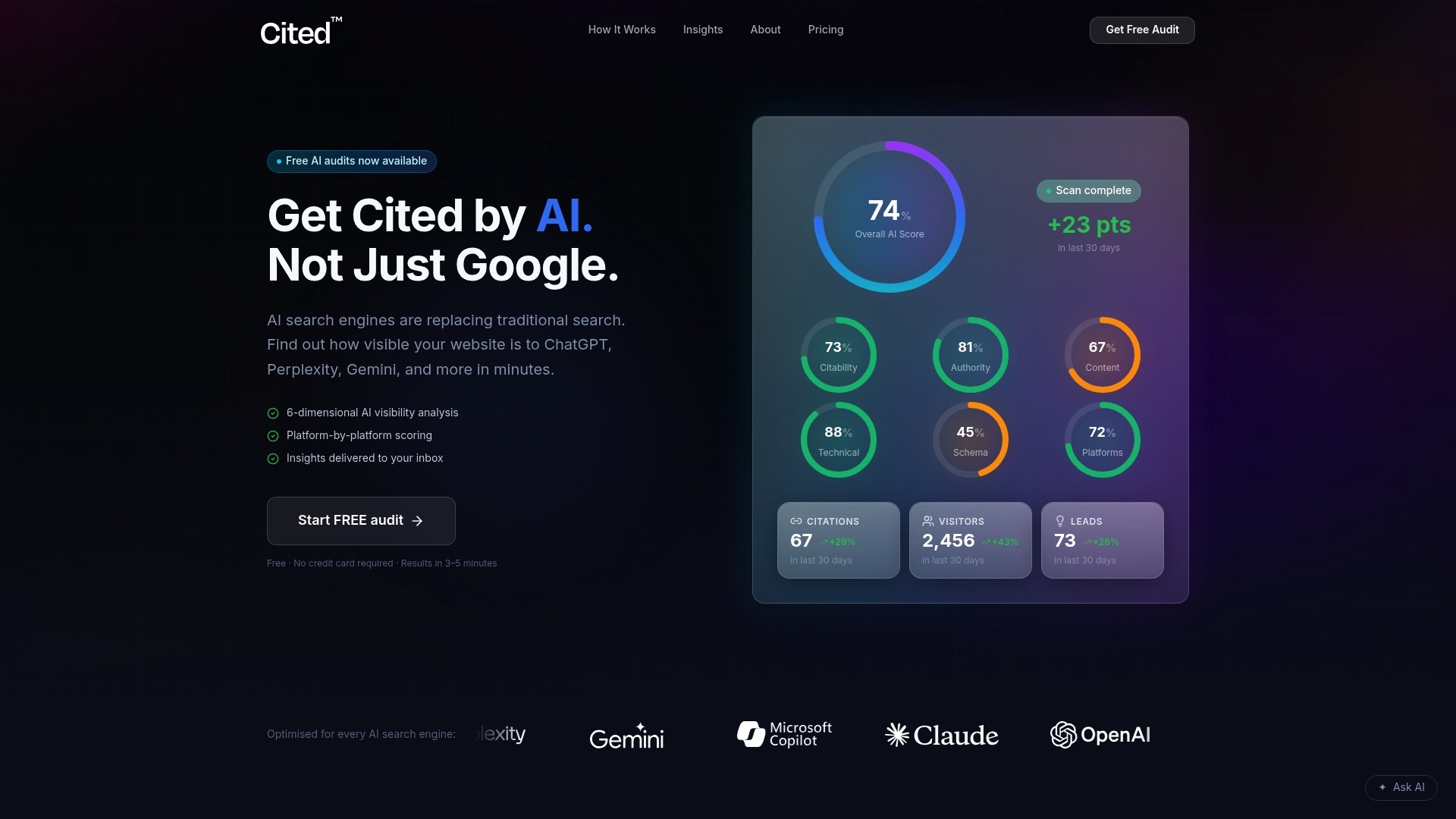
If you want to see how your own policy page performs against this kind of structural check, our free AI audit covers exactly this ground.
How can we help you prepare a policy page AI systems will cite?
We offer a free AI audit that checks whether your editorial policy page, and the documents it links to, are structured so that AI search engines can extract and cite them accurately; for insights on managing AI content creation challenges, see The AI Dilemma: Navigating Content Creation Challenges.
The audit looks specifically at:
- Schema markup on the policy page and linked documents.
- Author and editorial contact pages, and whether they are machine-readable.
- Downloadable assets such as reviewer guidance and codes of practice, and whether they render in a way AI systems can parse.
- Robots.txt and crawl settings that might be blocking the page from AI crawlers without your knowledge.
Where the audit finds issues, we offer Technical Fixes from £495 one-off for targeted corrections, or an AI Optimised plan from £995 per month for ongoing implementation. Enterprise projects are priced on request. Book a call to talk through what the audit found, or run the free audit first to see where you stand.
Publisher perspective: policies written for lawyers don't get cited
The received wisdom in academic publishing is that an editorial policy exists to cover liability: state the rules formally, keep the language precise, and trust that precision to protect the journal if something goes wrong. That approach produces pages that are legally sound and practically useless to the person trying to find out, in under a minute, whether their complaint will be heard or how long a decision takes.
The gap worth naming is this: a policy page's job is not to state that fairness exists, it is to show the exact mechanism by which fairness happens. "We handle conflicts of interest appropriately" protects nobody. "An involved editor is removed from handling their own submission and a replacement is notified" is checkable, and it is the kind of sentence that both a human reader and an AI system handling a citation query can quote with confidence.
Journals that treat their policy page as an operational document rather than a liability shield end up more trusted, not less, because every claim on the page is something a reader can verify against a named procedure.
— Tom Heaton
FAQ
What is editorial policy?
Editorial policy is the set of rules a publication follows for reviewing, accepting, correcting and retracting content, including who holds decision-making authority. It typically covers peer review, authorship criteria, conflicts of interest and complaints handling, and is published so authors and readers can check how decisions get made.
What is in an editorial page?
An editorial page in a newspaper carries unsigned opinion pieces reflecting the publication's own view, alongside signed opinion columns, letters from readers and sometimes cartoons. This differs from an editorial policy page, which states the rules a publication follows rather than offering opinion.
Which is the editorial page in a newspaper?
The editorial page is usually found near the front or in a dedicated opinion section, separate from news reporting, and is labelled as "Opinion" or "Editorial." It contains the publication's own unsigned stance on current issues, distinct from the straight news pages.
How do I know if an article is an editorial?
An editorial is unsigned, represents the publication's institutional view rather than one journalist's byline, and takes a clear position on an issue rather than reporting facts neutrally. If the piece argues a case and carries no individual author's name, it is almost certainly an editorial.
Sources
Recommended
Ready for your AI score?
See how visible your site is to ChatGPT, Perplexity & Gemini.
Start FREE auditResults in minutes · 100% free